
If you run a business in Dubai, you already know the pace here is unlike anywhere else. The skyline changes every few months, new brands pop up overnight, and customers expect digital experiences that match the ambition of the city itself.
So it makes sense that web design in Dubai is evolving just as fast. What worked two years ago — a nice-looking homepage with a contact form — simply doesn’t cut it anymore. In 2026, your website isn’t just a digital brochure. It’s your hardest-working salesperson, your first impression, and often the reason someone chooses you over a competitor.
We’ve spent months watching what’s actually working for businesses here in the UAE — not just what looks trendy on Dribbble. Here are the web design trends that are genuinely moving the needle in 2026.

1. AI That Actually Helps (Not Just Chatbots That Annoy)
Let’s be honest — most of us have closed a website the moment an aggressive chatbot popped up asking “How can I help you?” before we’ve even read the first line.
The AI integration we’re seeing in 2026 is different. It’s quieter, smarter, and genuinely useful. Think of it this way: instead of a pushy salesperson following you around a shop, it’s more like a store that rearranges itself based on what you’re looking for.
Here’s what that looks like in practice:
- Predictive search that understands what you mean, not just what you type. A real estate site in Dubai Marina now shows you apartments based on your browsing patterns before you even set filters.
- Dynamic content blocks that swap hero images, headlines, and calls-to-action based on whether you’re a first-time visitor or a returning customer.
- Smart product recommendations that actually make sense — not the “you bought a printer, here’s another printer” approach we’ve all seen.
The businesses getting this right in Dubai are seeing conversion rates climb by 15–30%. That’s not a small number when your average deal size is in the thousands of dirhams.
2. Arabic-English Bilingual Design Done Properly
This one hits close to home for anyone operating in the UAE. For years, “bilingual websites” meant slapping a Google Translate widget in the corner and hoping for the best. We’ve all seen the results — awkward layouts, broken navigation, and Arabic text that reads like it was written by someone who’s never spoken the language.
In 2026, bilingual design is finally getting the attention it deserves. And it goes far beyond just translating text.
A properly bilingual Dubai website in 2026 considers:
- Right-to-left (RTL) layouts that don’t just mirror the English version but are designed specifically for Arabic reading patterns
- Typography that respects both scripts — Arabic calligraphy has a completely different rhythm than Latin fonts, and pairing them well is an art
- Cultural nuances in imagery — the photos, icons, and illustrations that resonate with Arabic-speaking audiences aren’t always the same ones that work for English speakers
- Navigation patterns that feel natural in both directions, not just “flipped”
With over 200 nationalities living in the UAE and Arabic being the official language, getting this right isn’t optional for businesses that want to reach the full market. It’s a competitive advantage that most agencies still get wrong.

3. Dark Mode Is No Longer Optional
Remember when dark mode was that cool feature only tech companies offered? Those days are over.
In 2026, users expect it. And in Dubai specifically — where people are often browsing on their phones in dimly lit restaurants, during evening commutes, or poolside at night — dark mode isn’t just an aesthetic choice. It’s a usability requirement.
What we’re building for clients now includes:
- A toggleable light/dark theme that respects the user’s system preferences by default
- Colour palettes designed for both modes from day one (not dark mode as an afterthought)
- Images and graphics that work on both light and dark backgrounds — this is the detail most people miss
The luxury and hospitality brands in Dubai are especially embracing this. A dark interface feels premium, sophisticated, and modern — exactly the emotions these brands want to evoke.
4. Speed Isn’t a Feature — It’s Survival
Here’s a stat that should make every business owner pay attention: 53% of mobile visitors leave a site that takes longer than 3 seconds to load. In the UAE, where mobile internet penetration exceeds 99%, a slow website is quite literally losing you money every second.
Google’s Core Web Vitals have been a ranking factor since 2021, but in 2026 the bar has been raised. The targets that matter:
- Largest Contentful Paint (LCP) under 2.5 seconds — how fast your main content appears
- Interaction to Next Paint (INP) under 200 milliseconds — how responsive your page feels when someone clicks or taps
- Cumulative Layout Shift (CLS) under 0.1 — no more annoying content jumps while the page loads
What this means practically: heavy sliders with 8 high-resolution images are out. Lazy-loaded, optimised visuals with next-gen formats (WebP, AVIF) are in. Every JavaScript library needs to justify its existence. And if your hosting can’t deliver a Time to First Byte under 200ms, it’s time to upgrade.
5. Micro-Interactions That Build Trust
This is one of those trends that most people don’t consciously notice — but they absolutely feel it.
Micro-interactions are the tiny animations and feedback moments that make a website feel alive. A button that subtly changes colour when you hover over it. A form field that gives you a gentle checkmark when you’ve filled it in correctly. A loading indicator that actually tells you what’s happening instead of just spinning endlessly.
In 2026, these aren’t decorative extras — they’re trust signals. When a website responds to your actions with smooth, intentional feedback, your brain registers it as “professional” and “reliable.” When elements are static and unresponsive, it feels cheap.
Dubai businesses are particularly benefiting from this because the market is so competitive. When a potential customer is comparing three web design agencies or three restaurant websites, the one that feels more polished often wins — even if the actual services are similar.
6. Immersive Visuals: 3D, AR, and Beyond
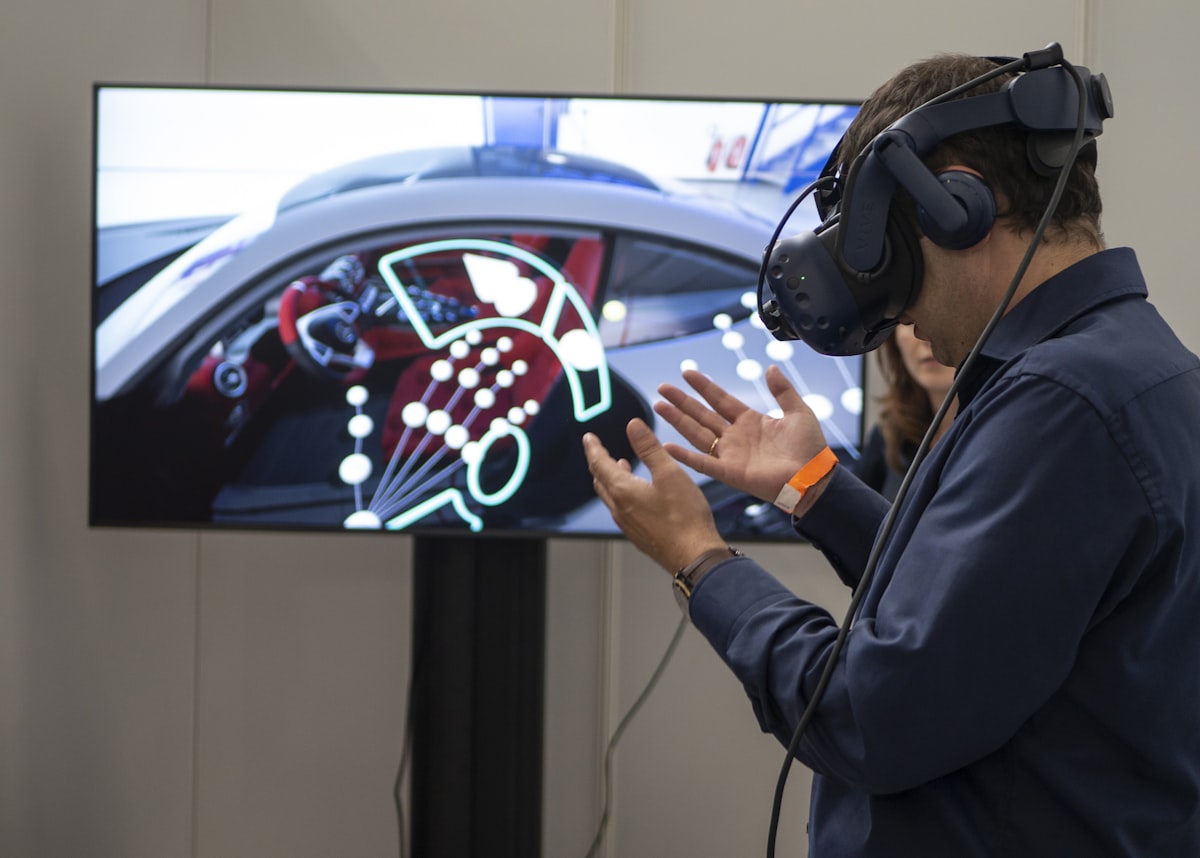
Dubai has always been a city that thinks big, so it’s no surprise that immersive web experiences are taking off here faster than almost anywhere else.
We’re seeing:
- Real estate companies offering 3D virtual tours that let you walk through an apartment in JBR from your living room in London
- Car dealerships with AR configurators that let you customise a vehicle and see it in your actual parking spot through your phone camera
- Interior design firms using WebGL-powered 3D room planners that run directly in the browser — no app download required
- Restaurants and hotels with immersive menu experiences and virtual venue tours
The technology has matured enough that these experiences no longer require expensive plugins or cause your phone to overheat. Modern browsers, especially on the latest iPhones and Samsung devices that are hugely popular in the UAE, handle 3D content natively and smoothly.
7. Sustainable Web Design (Yes, Websites Have a Carbon Footprint)
This might surprise you, but the internet accounts for roughly 3.7% of global carbon emissions — about the same as the airline industry. Every image loaded, every video streamed, every server request uses energy.
In 2026, sustainable web design has gone from a niche concern to a genuine business consideration, especially in the UAE where the government has committed to net-zero carbon emissions by 2050.
What does a sustainable website look like?
- Optimised images and code that reduce data transfer (which also makes your site faster — double win)
- Green hosting powered by renewable energy
- Efficient coding practices that minimise unnecessary server requests
- Dark mode by default (dark pixels on OLED screens use significantly less energy)
Some forward-thinking Dubai businesses are now displaying their website’s carbon footprint alongside their sustainability credentials. It’s a small detail, but it resonates with the growing number of eco-conscious consumers in the region.
8. Voice Search Optimisation
With smart speakers in more UAE homes than ever and Siri/Google Assistant usage climbing steadily, voice search is changing how people find businesses online.
The difference between typed and voice search is significant. Someone typing might search “web design company Dubai.” Someone using voice search is more likely to say “Who’s the best web designer near me?” or “How much does a website cost in Dubai?”
In 2026, smart web design accounts for this by:
- Structuring content around natural language questions (which is also great for featured snippets in Google)
- Implementing FAQ schema markup that voice assistants can pull answers from directly
- Ensuring local SEO is rock-solid — voice searches are three times more likely to be local than text searches
- Using conversational language in headings and copy instead of stiff, keyword-stuffed phrases
9. Scroll-Based Storytelling
The days of cramming everything above the fold are fading. In 2026, the best Dubai websites use the full scroll to tell a story.
Think of it like a well-designed presentation: each scroll reveals the next chapter. Background colours shift. Elements animate into view at just the right moment. Data visualisations build themselves as you scroll past them. By the time you reach the call-to-action at the bottom, you’ve been taken on a journey — not just shown a list of services.
This approach works particularly well for:
- Agency and portfolio websites (telling the story of a project from brief to launch)
- Product launches (building anticipation as the user scrolls)
- Annual reports and corporate presentations
- Real estate and tourism — industries where storytelling drives emotion and emotion drives decisions
10. Privacy-First Design
With the UAE’s Personal Data Protection Law (Federal Decree-Law No. 45 of 2021) now fully enforced, privacy isn’t just a European concern anymore. Dubai businesses need websites that handle personal data responsibly — and communicate that clearly to users.
In 2026, privacy-first design means:
- Cookie consent banners that actually work (not the ones that say “we use cookies” with no way to opt out)
- Transparent data collection practices explained in plain language, not legal jargon
- Minimal data collection by default — only asking for information you genuinely need
- Secure forms with visible trust indicators (SSL badges, encryption notices)
Users are more privacy-aware than ever. A website that respects their data builds trust. One that doesn’t will lose them — and potentially face regulatory consequences.
What This All Means for Your Business
If you’ve read this far, you might be feeling a bit overwhelmed. Ten trends is a lot to absorb, and not every one of them will apply to your specific business.
Here’s our honest advice: don’t try to implement everything at once.
Start with the fundamentals that affect every business:
- Speed — if your site takes more than 3 seconds to load on mobile, fix that first. Nothing else matters if people leave before they see your content.
- Mobile experience — over 80% of UAE internet traffic comes from mobile devices. Test your site on an actual phone, not just a desktop browser resized to look small.
- Clear messaging — before worrying about 3D animations or AI personalisation, make sure a visitor can understand what you do and why they should care within 5 seconds of landing on your homepage.
Once those basics are solid, then explore the trends that align with your industry and audience. A luxury real estate agency will benefit enormously from 3D tours and immersive visuals. A law firm probably needs clean typography, trust signals, and rock-solid performance more than it needs AR features.
The common thread across all these trends is this: in 2026, the best websites in Dubai don’t just look good — they work hard. They load fast, they adapt to each visitor, they build trust through every interaction, and they turn browsers into customers.
That’s what we help businesses build every day. If your website hasn’t been updated since before these trends existed, it might be time for a conversation about what’s possible.
UAE Web Designer is a web design and development agency based in Dubai, helping businesses across the UAE build websites that don’t just look great — they perform. Get in touch to discuss your project.